Ryan Loehr
17 December, 2025


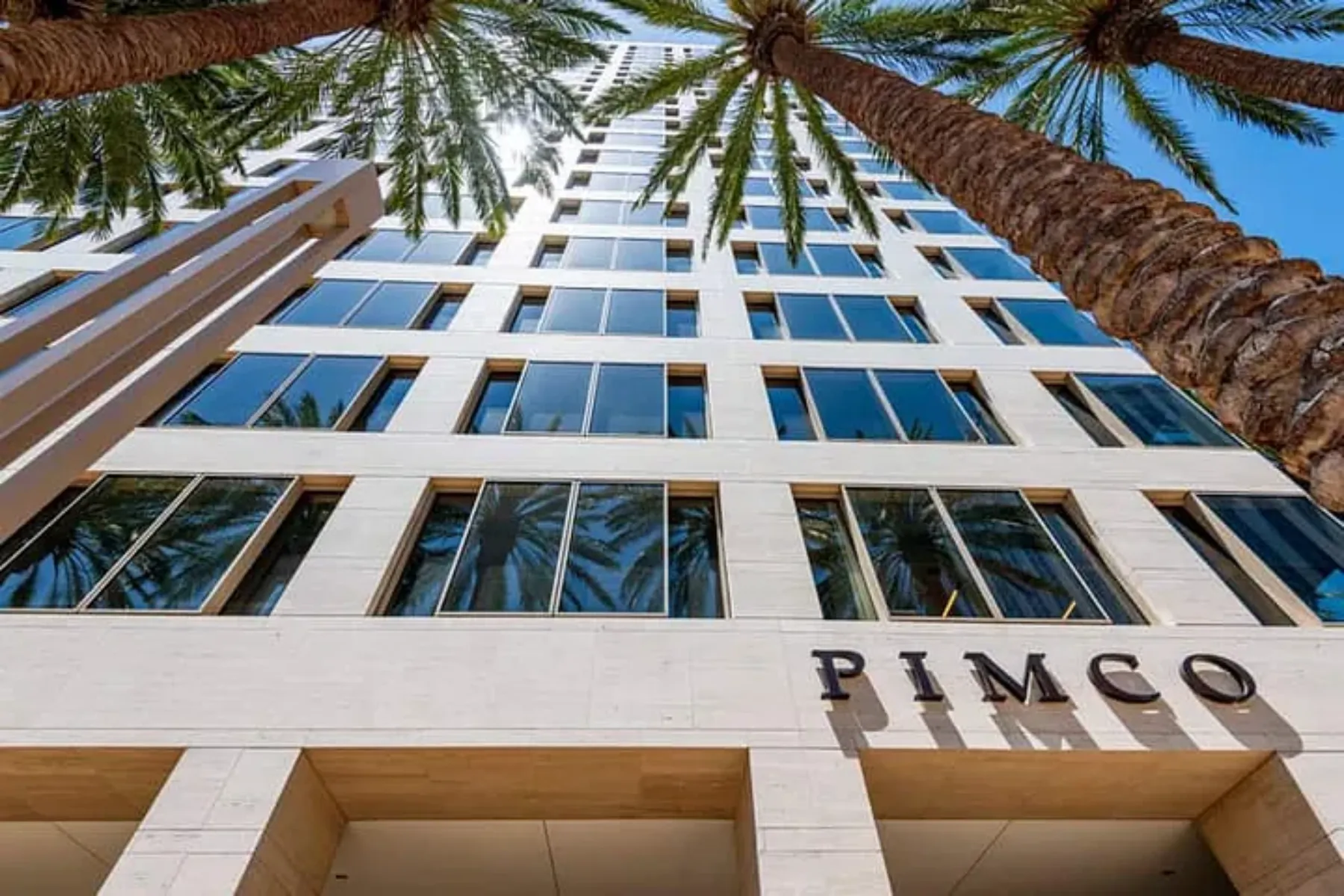
In recent weeks, myself and Tim Whybourne were invited to Pimco’s Headquarters in Newport, California. We were fortunate to meet a number of portfolio managers and division heads, including Daniel Ivascyn, Pimco’s Chief Investment Officer (CIO). Below are some takeaways.
In October 2025, Pimco closed the largest private debt transaction in its history: a $27 billion financing package for Meta’s Hyperion data center. Two weeks later, JPMorgan CEO Jamie Dimon warned investors that when you see “one cockroach” in credit markets — referring to the failures of First Brands and Tricolor — “there are probably more.”
These two moments crystallize the defining question facing alternative credit markets: How do you distinguish between sophisticated, well-structured private debt and the opaque, overleveraged lending that keeps bank CEOs awake at night?
Daniel Ivascyn, Pimco’s Chief Investment Officer, articulated an approach to private credit that offers Australian family offices a framework for navigating this landscape. His insights, combined with analysis of the Meta transaction and Dimon’s warnings, reveal why not all private credit is created equal.
“Pimco just printed that large Meta trade, biggest trade in Pimco history,” Ivascyn explained during our conversation. “We like it, because at the end of the day after our analysis, we’re basically exposed to Meta credit. Meta is a good credit — a diversified tech platform generating a lot of cash flow.”
The structure of this transaction is worth understanding in detail, as it represents the evolution of private credit from middle-market lending to infrastructure-scale financing:
The Structure:
This wasn’t traditional corporate debt. It was structured as investment-grade, asset-backed securities with what S&P called a “linchpin” guarantee from Meta that earned the debt its A+ rating. The bonds priced at par and immediately jumped above 110 cents on the dollar, generating Pimco approximately $2 billion in paper profits within days.
The critical insight: “You’ve got to be very careful when you’re looking to fund AI infrastructure investments,” Ivascyn cautioned. “You don’t have as high a quality tenant, or you have a weaker deal structure.”
This is where quality matters. This is where structure matters. And this is where the distinction between sophisticated private credit and the “cockroaches” begins to emerge.
Contrast Pimco’s Meta transaction with what Dimon encountered weeks later. JPMorgan took a $170 million write-off on subprime auto lender Tricolor Holdings, which filed for Chapter 7 bankruptcy amid what the bankruptcy trustee called “pervasive fraud of rather extraordinary proportion.”
Then First Brands, an auto-parts supplier, imploded with $2.3 billion in what court filings revealed as undisclosed “off-balance sheet financing” spread across private credit markets. The Department of Justice opened a criminal investigation.
“My antenna goes up when things like that happen,” Dimon told analysts. “When you see one cockroach, there are probably more. Everyone should be forewarned.”
First Brands was the 42nd largest borrower in the Morningstar LSTA US Leveraged Loan Index. Its collapse rippled through CLO portfolios globally. Barclays disclosed £110 million in losses. Jefferies revealed a $715 million position.
This wasn’t isolated fraud. This was broadly syndicated exposure touching banks, private credit funds, and structured vehicles across the credit ecosystem.
Ivascyn challenged the “public versus private” credit narrative: “People keep saying public versus private. These are pretty well integrated credit markets. You don’t have pristine underwriting over here and horrendous underwriting over here.”
First Brands had exposure across multiple private credit BDCs, CLOs, and public syndicated markets. The distinction between public and private credit is increasingly academic when the same borrowers access multiple channels.
“By the way, do we have it or not? We do have a little bit,” Ivascyn admitted about First Brands exposure, demonstrating that even sophisticated managers can have modest exposure to problematic credits in diversified portfolios.
Ivascyn addressed the disconnect between liquid and illiquid credit instruments. He told his team: “Sell your semi-liquid stake and buy a portfolio of tradable BDCs.”
“Two years ago, the public basket of commercial real estate tradable REITs versus the non-tradables — it’s just a valuation gap. Massive,” he explained. “That gap can’t remain this wide for long. Something’s going to give.”
The issue isn’t that private credit is broken. The issue is that retail investors in non-traded vehicles may not understand the liquidity risk they’re accepting, and market pricing between liquid and illiquid versions of similar credit risk has diverged dangerously.
So how do sophisticated allocators like Pimco distinguish between opportunities like the Meta transaction and the landmines Dimon warns about?
Quality private credit characteristics (Meta/Pimco model):
Problematic private credit characteristics (First Brands/Tricolor model):
Ivascyn’s framework for credit selection is instructive: “Investment grade fundamentals are quite strong, spreads tight. High yield market fundamentals are pretty good. Most of the junky stuff, aggressive stuff, has migrated into the loan space or into the private credit space.”
His positioning: “We are trying to be as underweight corporate credit as we can be, while finding other sources of yield that are correlated to the credit markets.”
Ivascyn compared private credit growth to the pre-financial crisis mortgage market: “Mortgage market pre-GFC grew from a trillion to two and a half trillion. Hasn’t grown at all since. Private credit markets growth.”
“US home prices never went down. You put in your model that home prices don’t go down, and you lend to the riskiest people you can find.”
The lesson: sustained periods without defaults create complacency. Models backtest beautifully when excluding tail risks. Then the cycle turns.
“We’re not as alarmist as subprime,” Ivascyn clarified. “We just don’t like it. We’d like spreads wider and better protections.”
Dimon’s warnings resonated with regulators. Bank of England Governor Andrew Bailey announced a system-wide investigation: “Are these cases idiosyncratic, or the canary in the coalmine?”
Germany’s Bundesbank warned that “spillovers” from private credit pose regulatory risk. This attention creates opportunity for managers built on underwriting discipline rather than distribution prowess.
What should Australian family offices take from these contrasting approaches?
First, private credit is not monolithic. The Meta/Pimco transaction and First Brands implosion share only a label. Structure, sponsor quality, and transparency separate quality from catastrophe.
Second, valuation gaps between liquid and illiquid credit instruments cannot persist. If you’re holding illiquid positions at marks significantly above comparable public instruments, question those valuations aggressively.
Third, we’re in an extended credit bull market — 14 years by Ivascyn’s count. When cycles turn, weak underwriting will be exposed brutally.
Fourth, prioritize managers who demonstrate discipline over distribution. Can your private credit managers articulate their exposure as simply as “we’re exposed to Meta credit, which is good credit”? If not, why not?
Finally, even sophisticated managers have exposure to problematic credits. The difference is how they structure positions, size risks, and respond when problems emerge.
Even as Dimon warned about cockroaches, his CFO defended the sector: “A lot of private credit actors are large, very sophisticated, very good at credit underwriting.”
Blue Owl’s Marc Lipschultz pushed back, noting both failures originated in bank-led markets. “There are people with parochial interests in the industry not continuing to grow.”
But Ivascyn’s measured perspective serves investors best: these aren’t separate universes. In extended bull markets, discipline erodes everywhere — banks, direct lenders, and structured credit vehicles alike.
The contrast between Pimco’s Meta transaction and the First Brands/Tricolor failures is a story of discipline versus complacency, transparency versus opacity.
For Australian investors: private credit can play a valuable role, but only when approached with Ivascyn’s skepticism and structural rigor. The Meta transaction worked because Pimco underwrote Meta’s credit, structured appropriate protections, and priced for complexity.
The cockroaches thrived because borrowers layered opaque financing across channels, lenders failed to coordinate, and pricing didn’t reflect true risk.
In private markets, cockroaches multiply in dark spaces. The solution isn’t to avoid private credit — it’s to insist on light, transparency, and quality, even when that means passing on outsized returns.
As Ivascyn put it: “We don’t really hate corporate credit, it’s just tight. When we don’t see spreads we like and protections we want, we own a lot less of it.”
Sometimes the most important investment decision is the discipline to say no.
Emanuel Whybourne & Loehr Pty Ltd (ACN 643 542 590) is a Corporate Authorised Representative of EWL PRIVATE WEALTH PTY LTD (ABN: 92 657 938 102/AFS Licence 540185).Unless expressly stated otherwise, any advice included in this email is general advice only and has been prepared without considering your investment objectives or financial situation.
There has been an increase in the number and sophistication of criminal cyber fraud attempts. Please telephone your contact person at our office (on a separately verified number) if you are concerned about the authenticity of any communication you receive from us. It is especially important that you do so to verify details recorded in any electronic communication (text or email) from us requesting that you pay, transfer or deposit money, including changes to bank account details. We will never contact you by electronic communication alone to tell you of a change to your payment details.
This email transmission including any attachments is only intended for the addressees and may contain confidential information. We do not represent or warrant that the integrity of this email transmission has been maintained. If you have received this email transmission in error, please immediately advise the sender by return email and then delete the email transmission and any copies of it from your system. Our privacy policy sets out how we handle personal information and can be obtained from our website.
The information in this podcast series is for general financial educational purposes only, should not be considered financial advice and is only intended for wholesale clients. That means the information does not consider your objectives, financial situation or needs. You should consider if the information is appropriate for you and your needs. You should always consult your trusted licensed professional adviser before making any investment decision.
Emanuel Whybourne & Loehr Pty Ltd (ACN 643 542 590) is a Corporate Authorised Representative of EWL PRIVATE WEALTH PTY LTD (ABN: 92 657 938 102/AFS Licence 540185).Unless expressly stated otherwise, any advice included in this email is general advice only and has been prepared without considering your investment objectives or financial situation.
There has been an increase in the number and sophistication of criminal cyber fraud attempts. Please telephone your contact person at our office (on a separately verified number) if you are concerned about the authenticity of any communication you receive from us. It is especially important that you do so to verify details recorded in any electronic communication (text or email) from us requesting that you pay, transfer or deposit money, including changes to bank account details. We will never contact you by electronic communication alone to tell you of a change to your payment details.
This email transmission including any attachments is only intended for the addressees and may contain confidential information. We do not represent or warrant that the integrity of this email transmission has been maintained. If you have received this email transmission in error, please immediately advise the sender by return email and then delete the email transmission and any copies of it from your system. Our privacy policy sets out how we handle personal information and can be obtained from our website.


NewsLetter

Free Download


